Artist Spotlight: Jeri Warhaftig
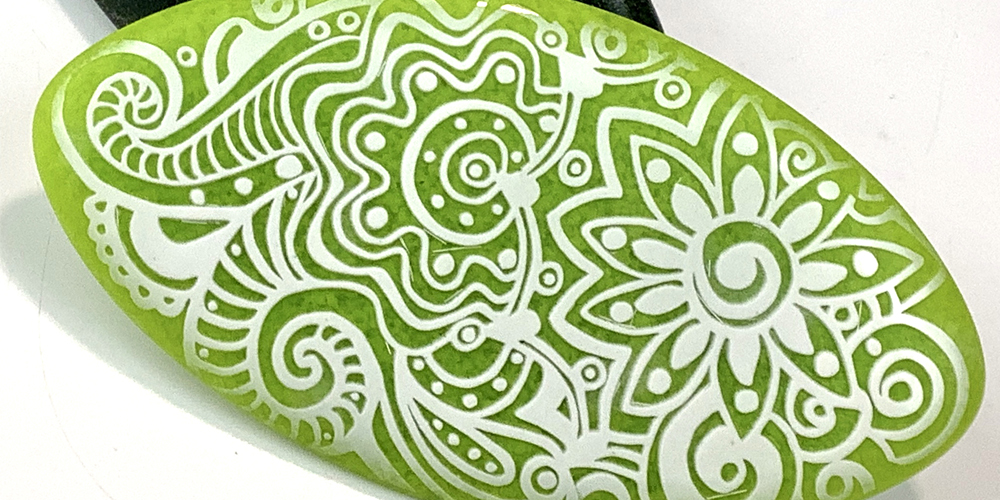
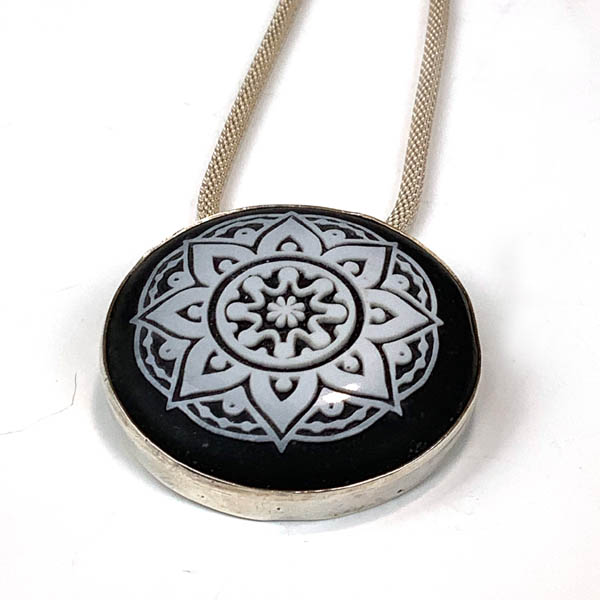
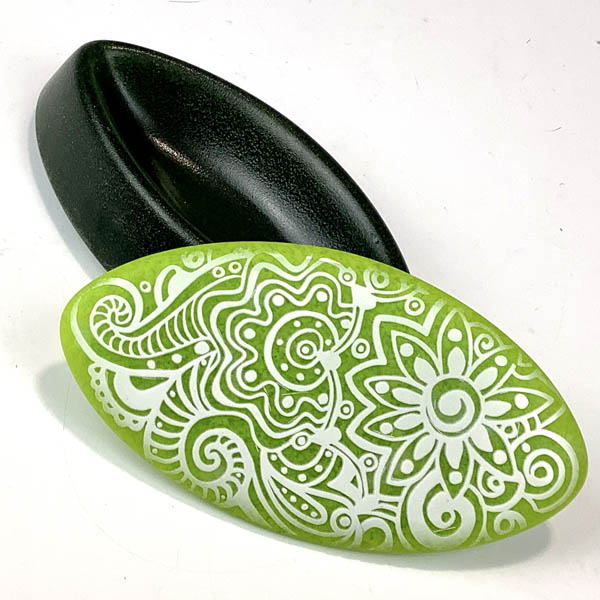
Jeri Warhaftig is a lifelong New Jersey resident and glass artist, author, and teacher. Publications and gallery exhibitions across the country feature her glass art. To her credit, the New Jersey Arts Annual,* a unique series of exhibits highlighting the State’s visual and performing artists, included her work twice by jurors from the New Jersey State Museum.
Since 2007, each president of the International Society of Glass Bead Makers (ISGB) has selected work by artists to reside in a permanent exhibition known as “The President’s Collection” at the Corning Museum of Glass. Each president chooses work based on the artist’s style, design, technique, aesthetics, and contribution to the ISGB and the glass community. The collection includes two of Jeri’s beads.
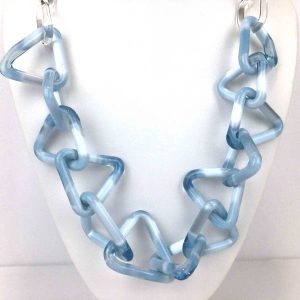
Jeri is the author of two books on the craft of glass, the Glass Bead Workshop and Creating Glass Beads, both published by Lark. She is considered an expert in glass bead making, borosilicate glass chains, and intricate sandblasted designs.
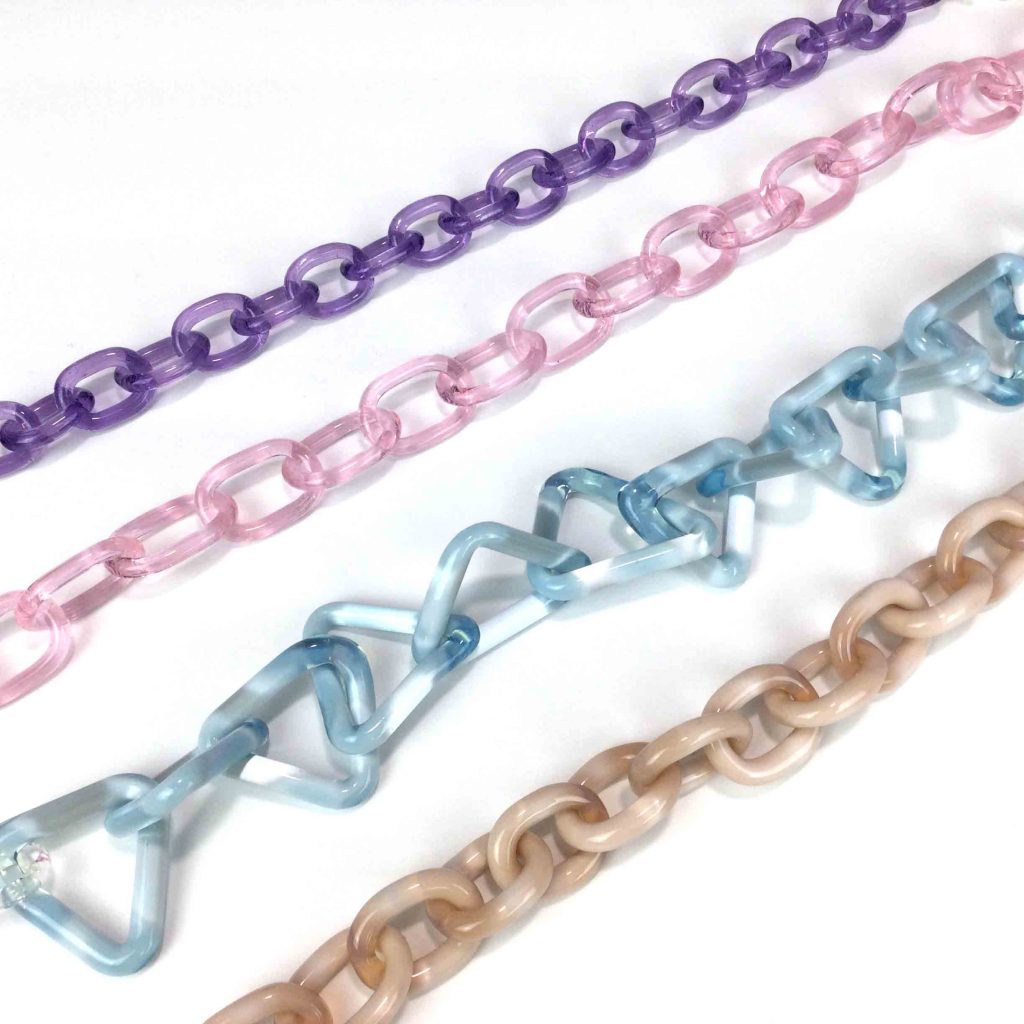
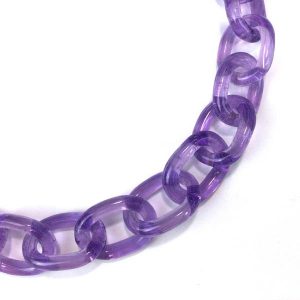
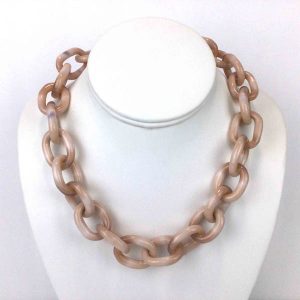
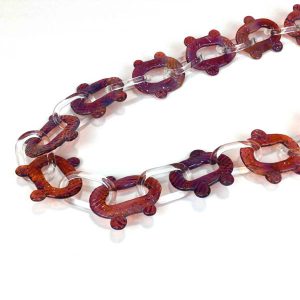
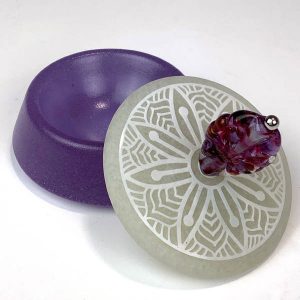
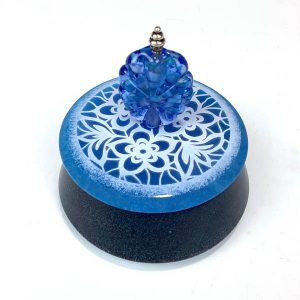
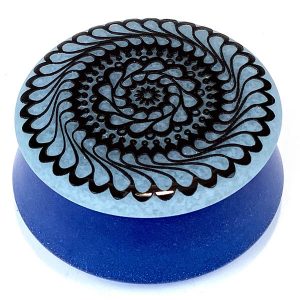
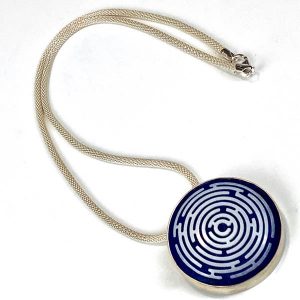
She is known for her innovative link shapes, the precision of her forms, and her recent use of dichroic finishes. Jeri’s current body of work includes her cast glass boxes, which serve as a canvas for her coldworked imagery. She is also a prolific borosilicate glass chain artist making a wide array of chains in varying colors, sizes, and styles for necklaces.
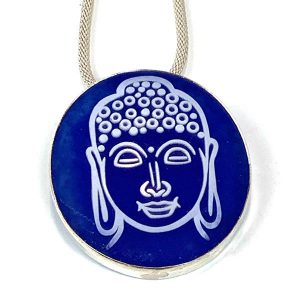
A chain she created featuring a fused glass cabochon and handmade sterling silver findings won first place in the juried jewelry category at the 2020 Pittsburgh Glass Center “Art on Fire” glass auction.
Jeri teaches both virtually and in person. Her primary areas of instruction include frit casting, bead making, and borosilicate chain making. She frequently offers webinars and teaches around the United States in glass schools and studios.
Instagram: @Jeri_NJ
Facebook: Jeri Warhaftig Glass Art
*The New Jersey Arts Annual is a unique series of exhibitions highlighting the State’s visual and performing artists. In partnership with major museums around the State, one exhibition takes place each year, alternating between host institutions. These exhibits are open to artists currently living or working in New Jersey. The Arts Annual series is sponsored by the New Jersey State Council on the Arts, a partner agency of the National Endowment of the Arts.
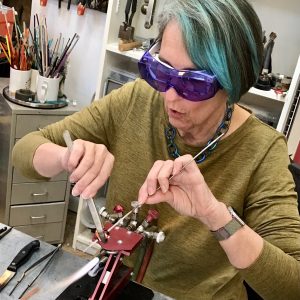 During a studio visit in March 2022, Jeri Warhaftig graciously demonstrated and narrated making a glass bead at a torch. This bead has inclusions of dichroic glass and a copper cut out of a dove.
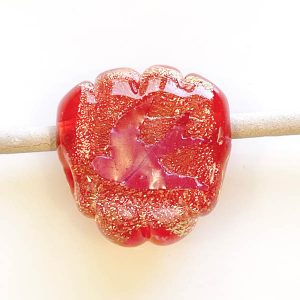
Above: Glowing hot glass demonstration bead, just before it goes into a kiln for a soak and a slow, controlled cool down
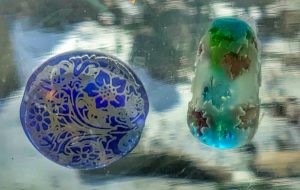
Above: Two detailed, examples of sandblasted glass beads
Artist Spotlight: Amy Peseller
From the Artist
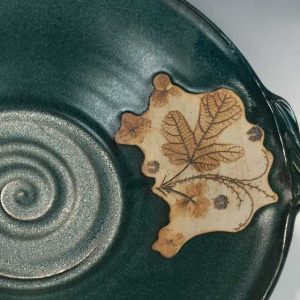
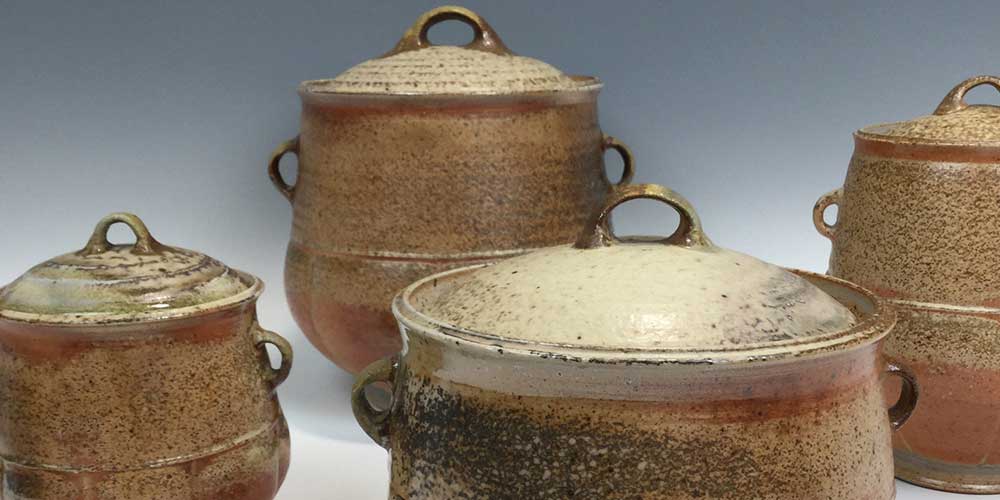
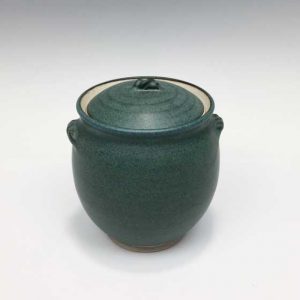
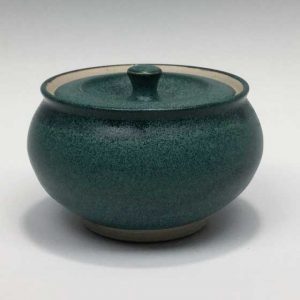
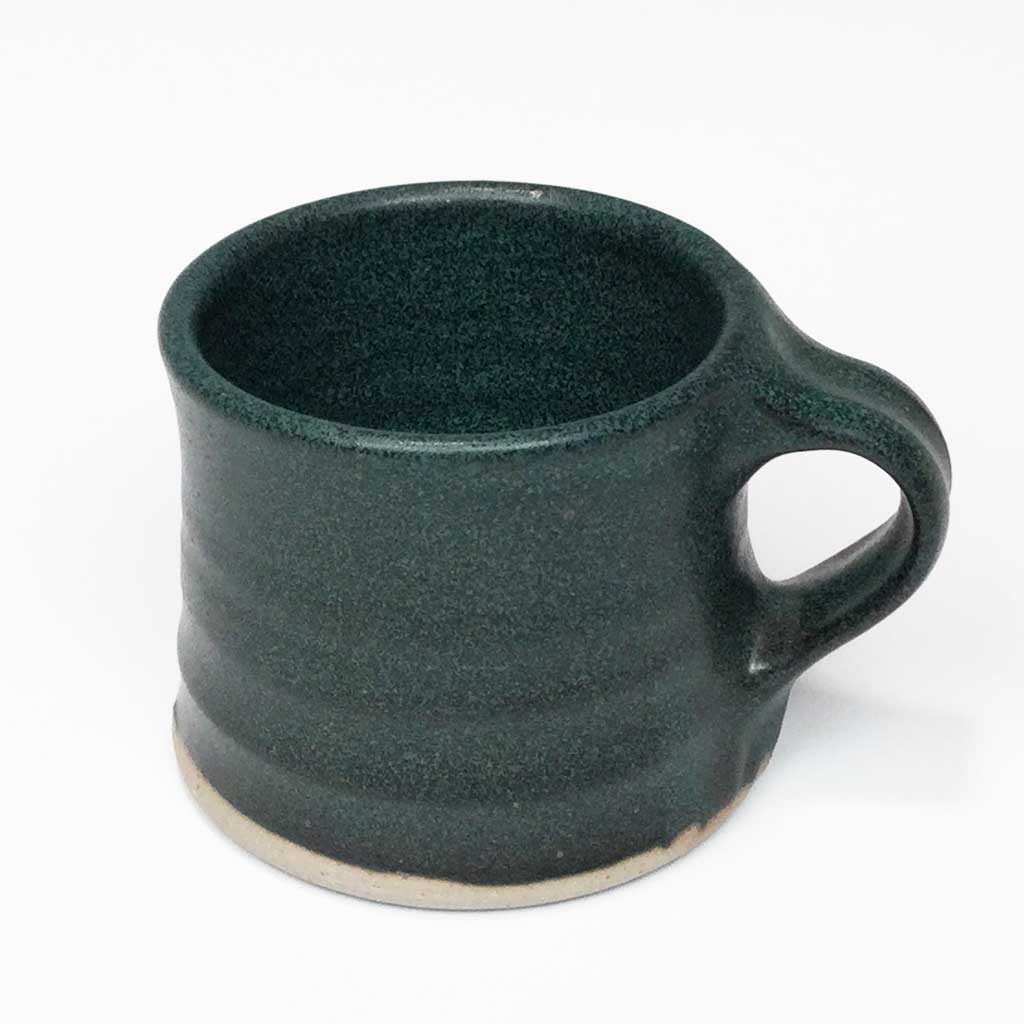
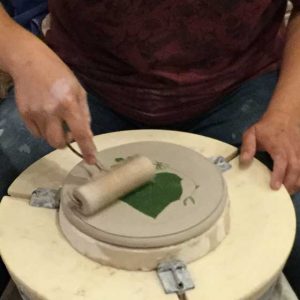
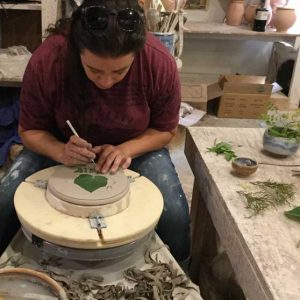
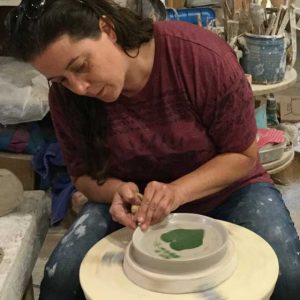
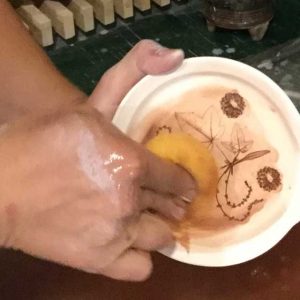
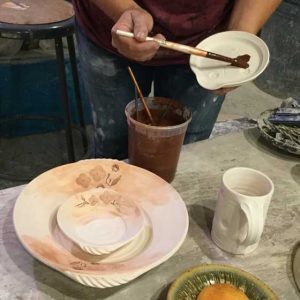
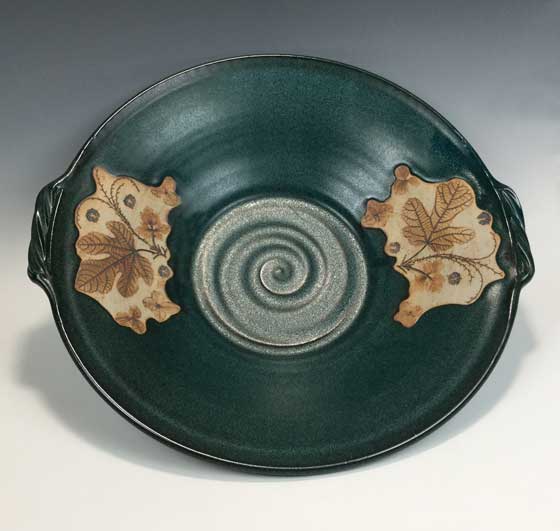
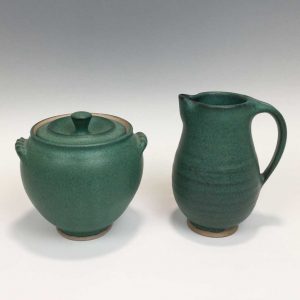
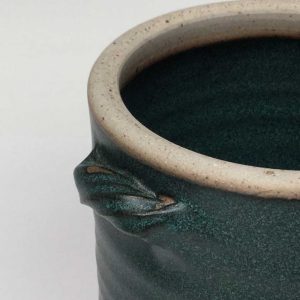
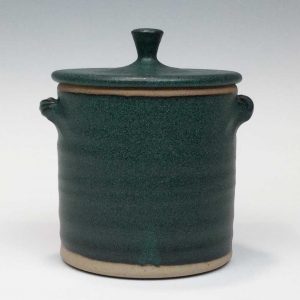
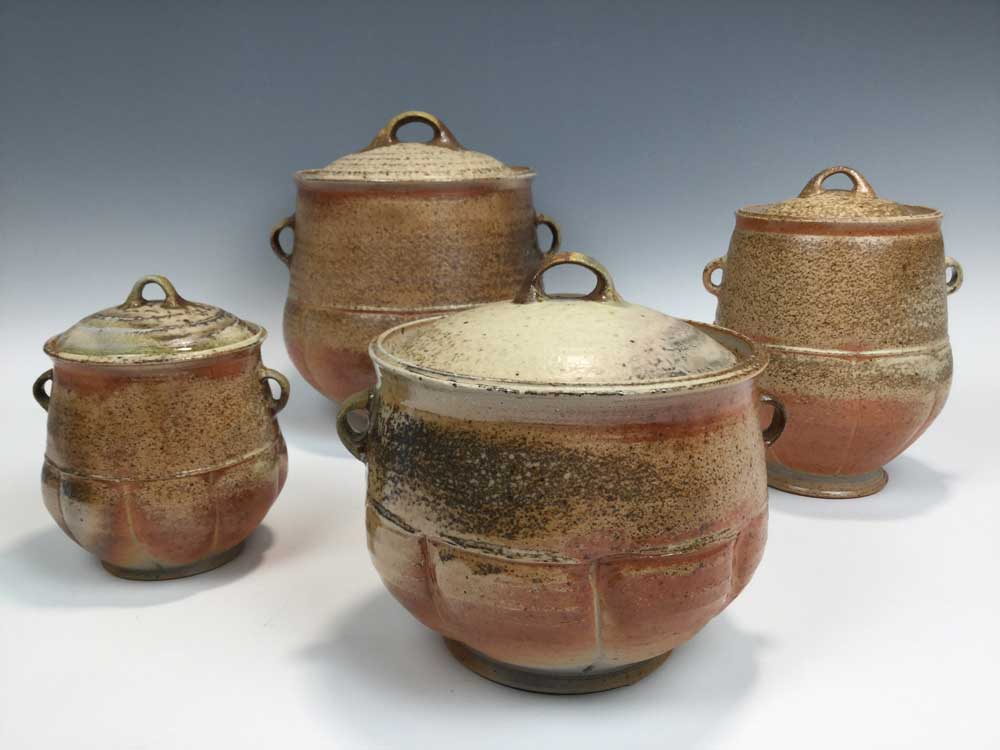
I like to say, quite simply, I am a potter. I fell in love with clay in high school. I was lucky enough to have a decent school, which provided classes in many art forms. I attended The University of the Arts in Philadelphia, earning a Bachelor’s of Fine Arts degree in Ceramics. After graduation, it was time to learn what it meant to make clay a career and a life, so I drowned myself in experiences. That’s what crafts are all about, right? Learning hands-on, I did internships and work exchange programs, one of which was, The Morean Arts Center for Clay (known back then as St. Pete Clay) in Florida. I spent months in North Carolina, helping artists wood firing their massive amazing kilns and assisting in their studios. I traveled to Japan, where I stayed in pottery towns with local artists, firing kilns and taking in the culture. I went to workshops, attended conventions, visited institutions, and met so many great people in the field.


Artist Spotlight: Terry Plasket
From the Artist
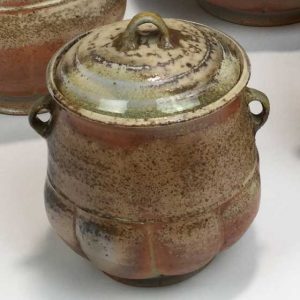
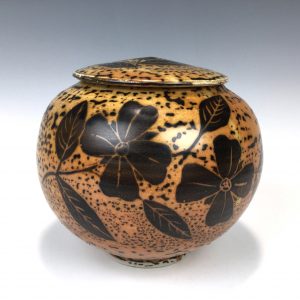
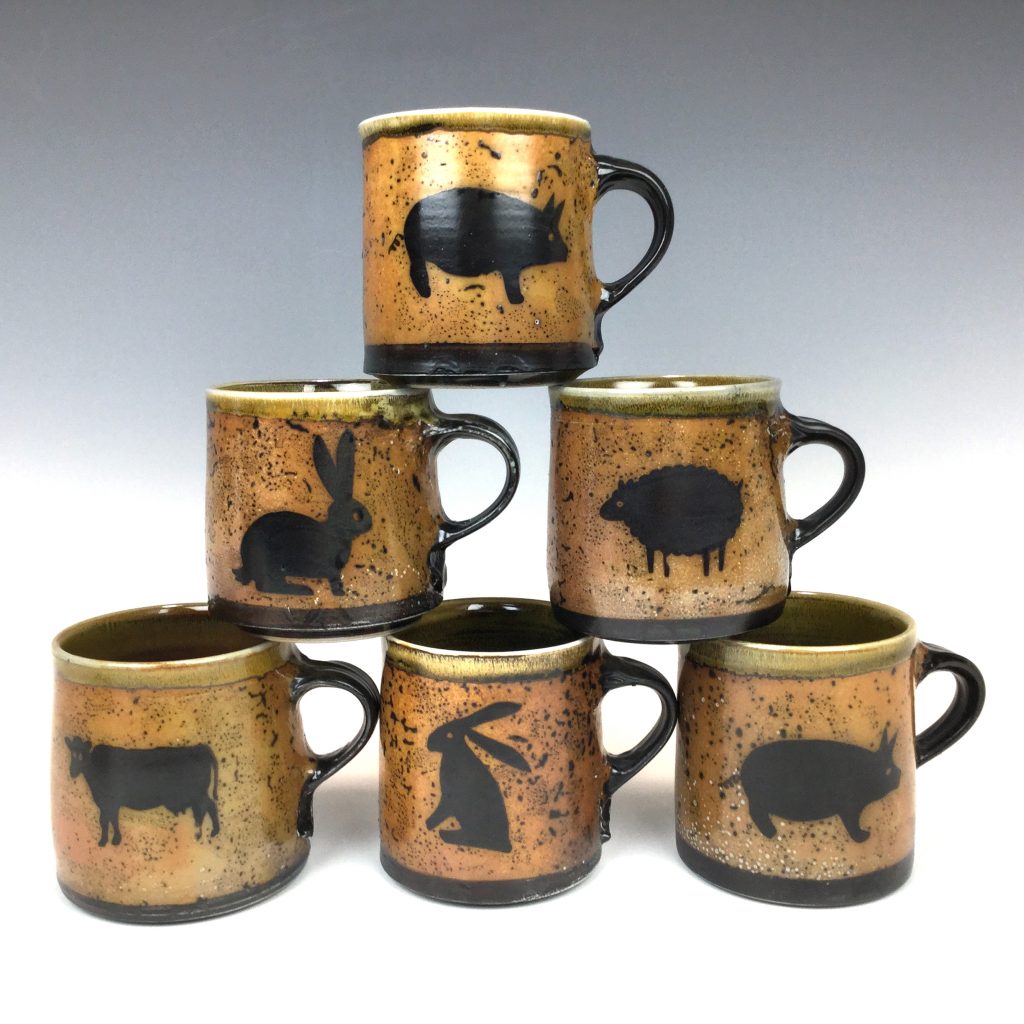
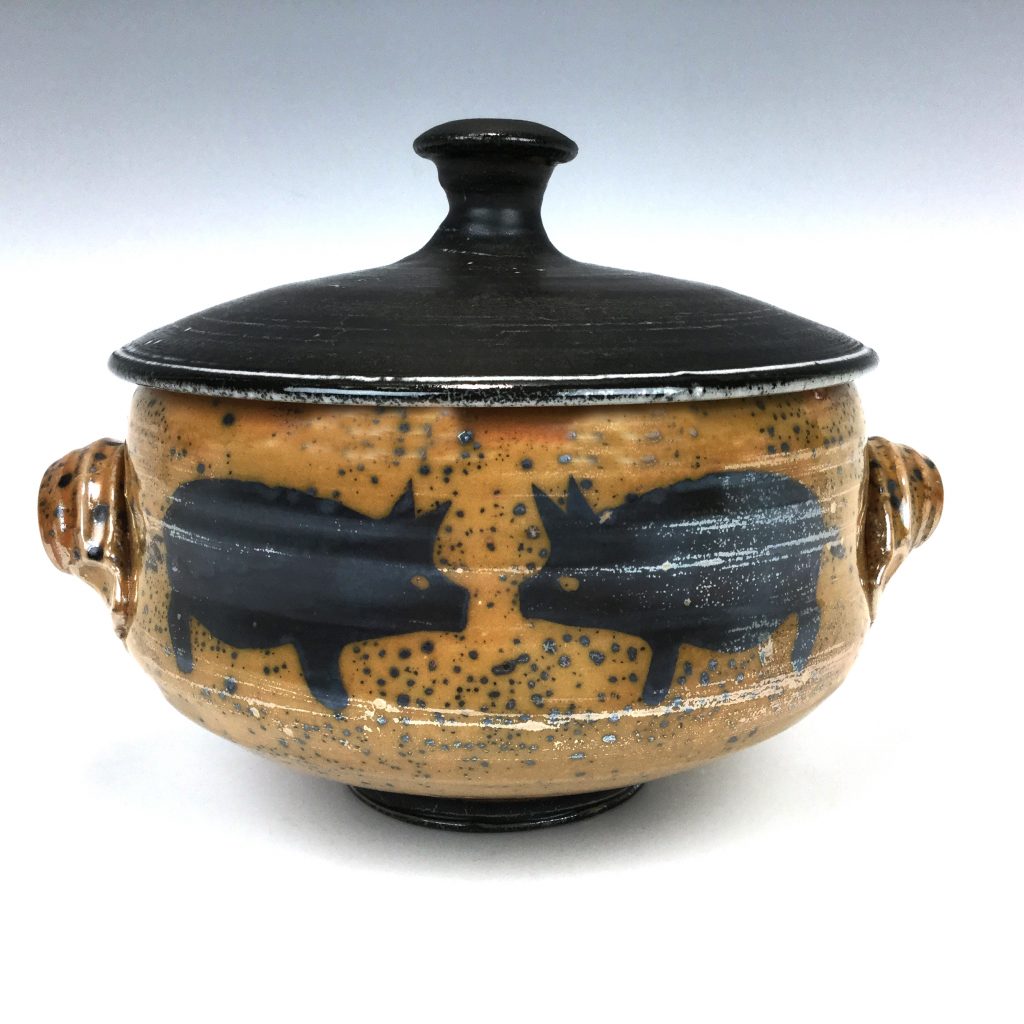
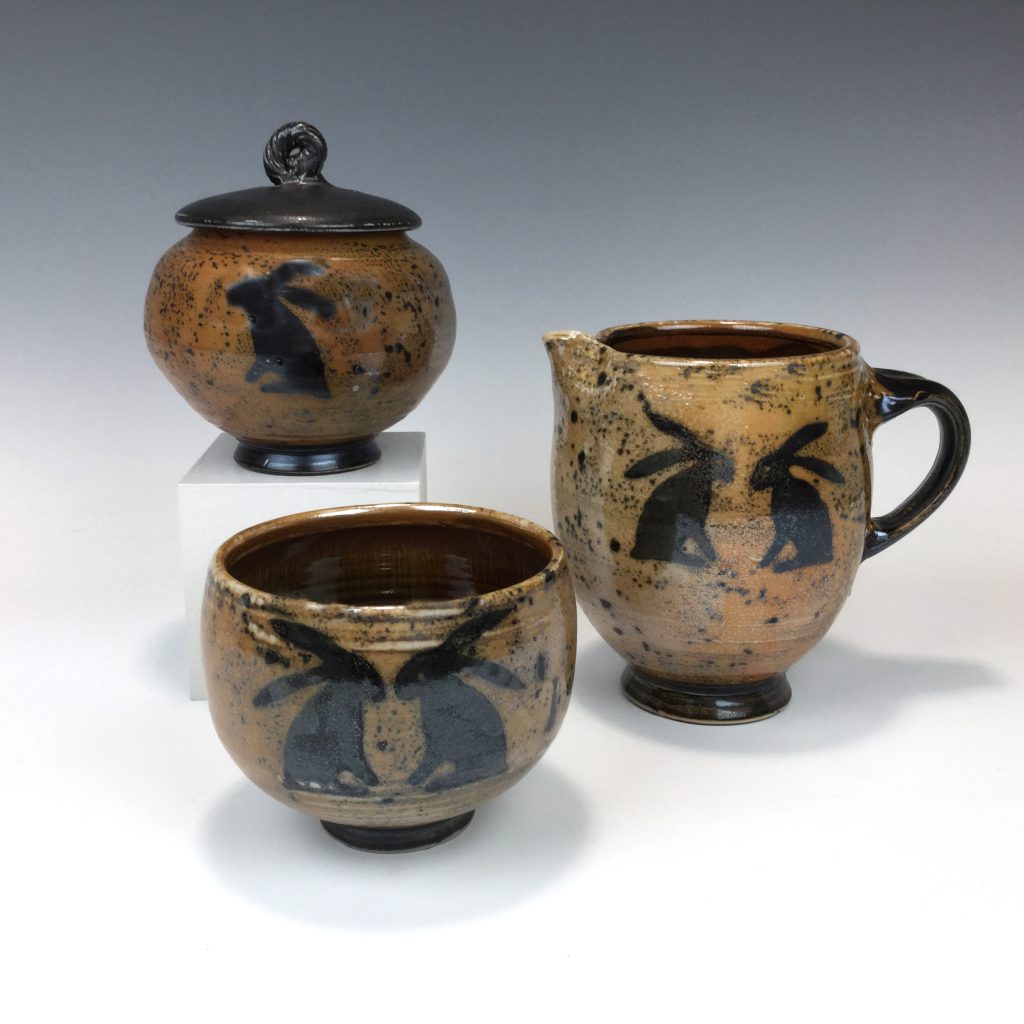
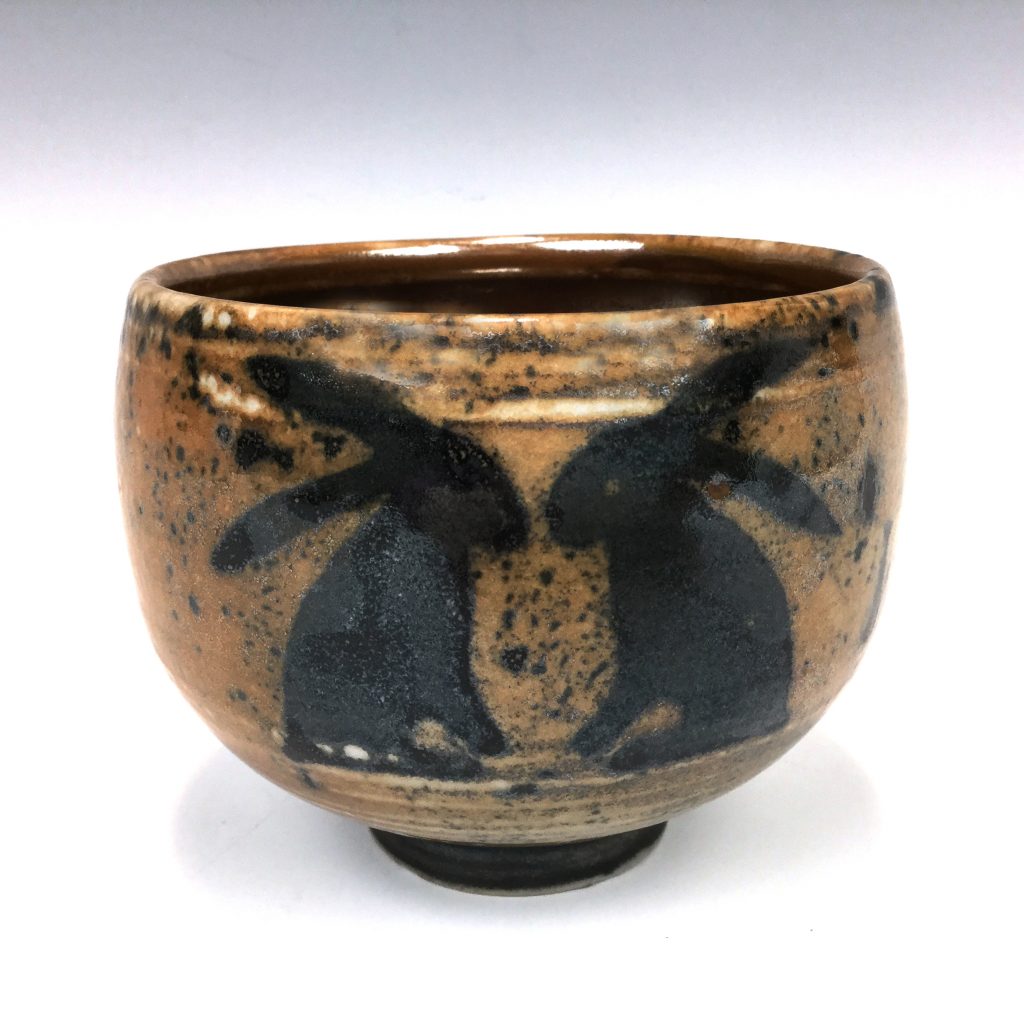
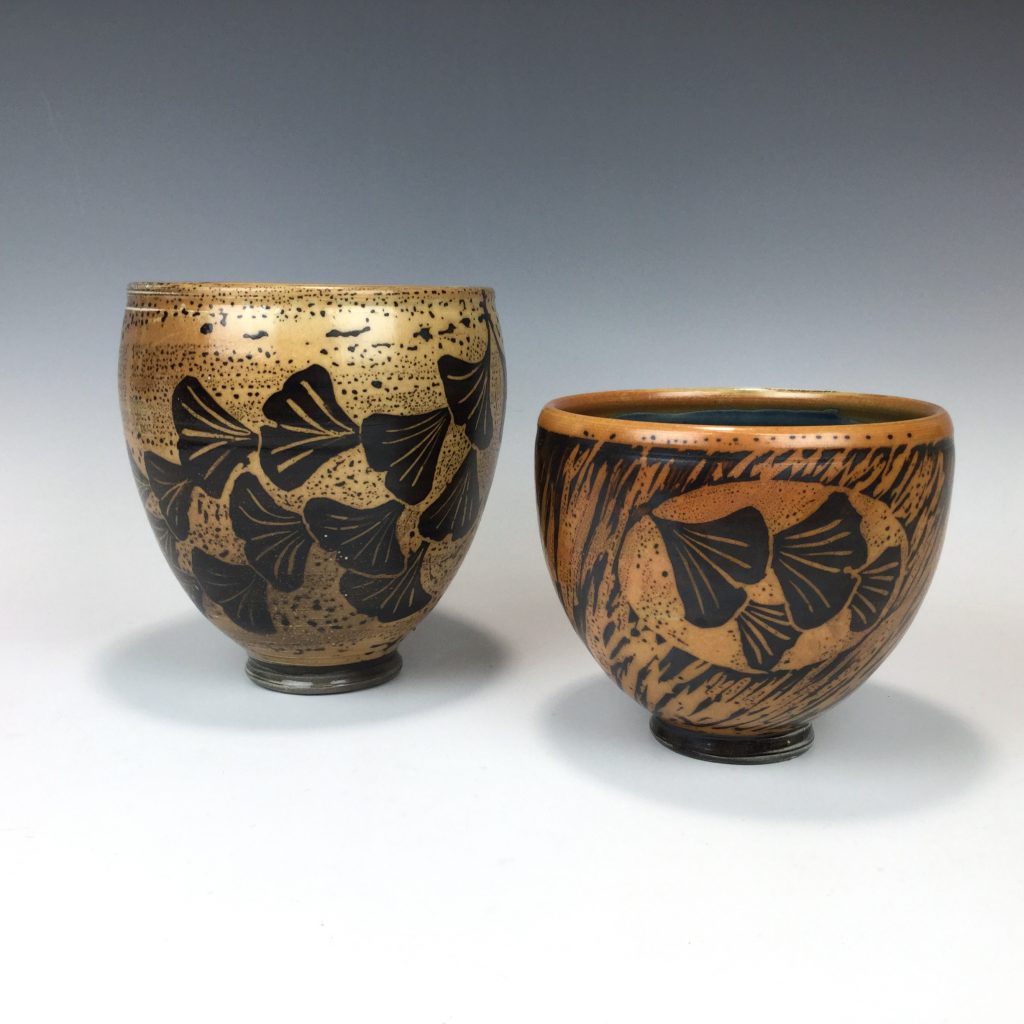
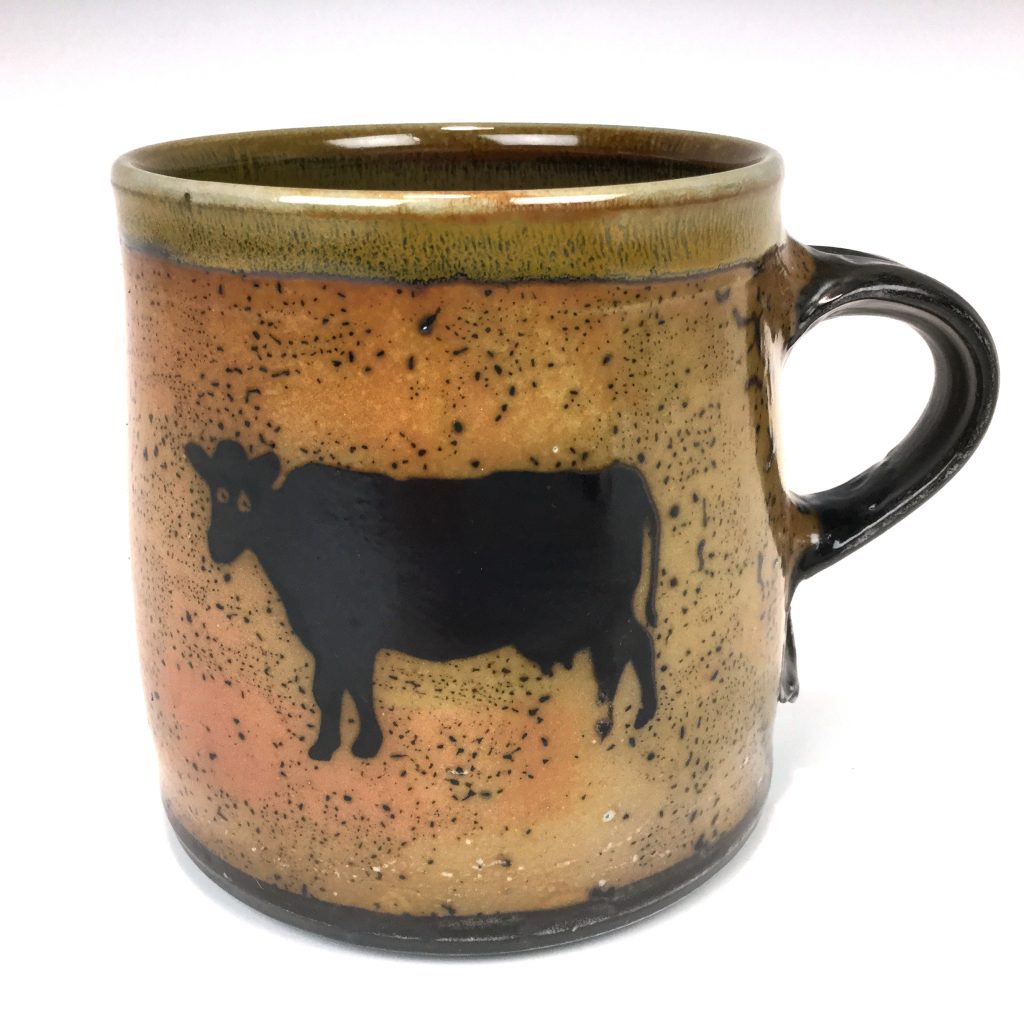
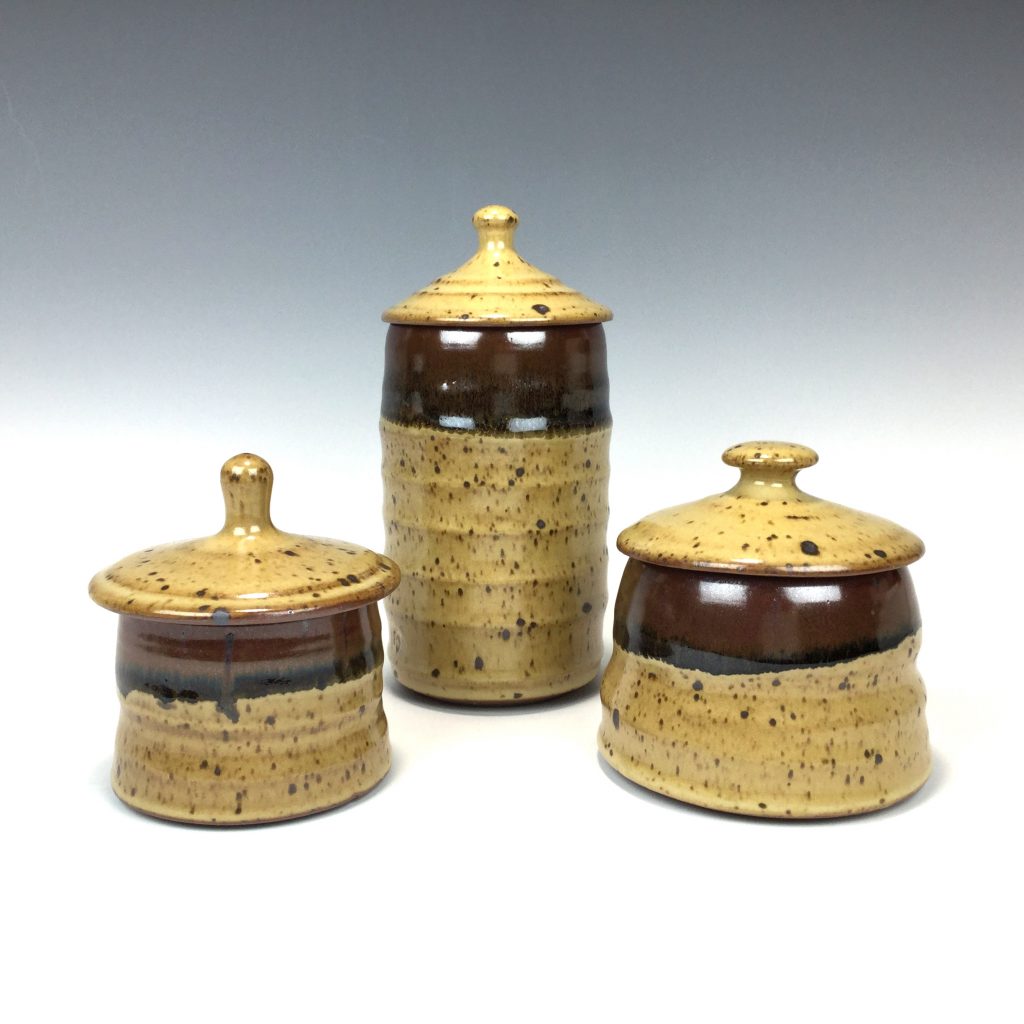
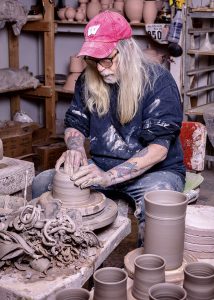 This year will mark 42 years of my tenure in the pottery at WheatonArts. Though I was introduced to salt glazing in college, it was here at WheatonArts that I have developed a line of work that has primarily been centered around the salt glaze process. For those who don’t know what salt glazing is, I can describe the process. Instead of applying the glaze to the pottery and fusing it on in the kiln, salt glazing finishes are created by the firing process. When it is dry in an electric kiln to 1800 degrees in an electric kiln, I first fire the ware, which hardens the clay, but it remains porous, much like a terra cotta flower pot. In this stage, I usually put a liner glaze on the insides of my pots. Though the outsides could remain untreated, I usually hand-paint designs on them using powdered metals such as iron, cobalt, and titanium mixed with water which then soaks into porous clay. The pots are then loaded into our gas-fired salt kiln and heated a second time to 2350 degrees F, at which time we throw ordinary rock salt into the bottom of the kiln. At this temperature, the salt immediately vaporizes. Some of the sodium from the salt will react with the silica in the clay forming a textured transparent glaze over the entire surface of the pots. Salting the kiln takes about two hours, and then the kiln is shut down and allowed to cool naturally for two days.
In addition to the salt kiln, we have a gas fire reduction kiln where we apply glazes before the second firing and again heat to 2350 degrees F to vitrify the clay and melt the glazes to the surface of the clay. Twice a year, we try to fire our two-chambered Noborigama wood-fired kiln. This is one of my favorite ways to fire my pots but also the most laborious. The amount of prep work cutting and splitting all the wood and scheduling everyone to do their shift is a lot of work, but knowing this is a process that potters have done for thousands of years and one that I am carrying on is immensely rewarding.
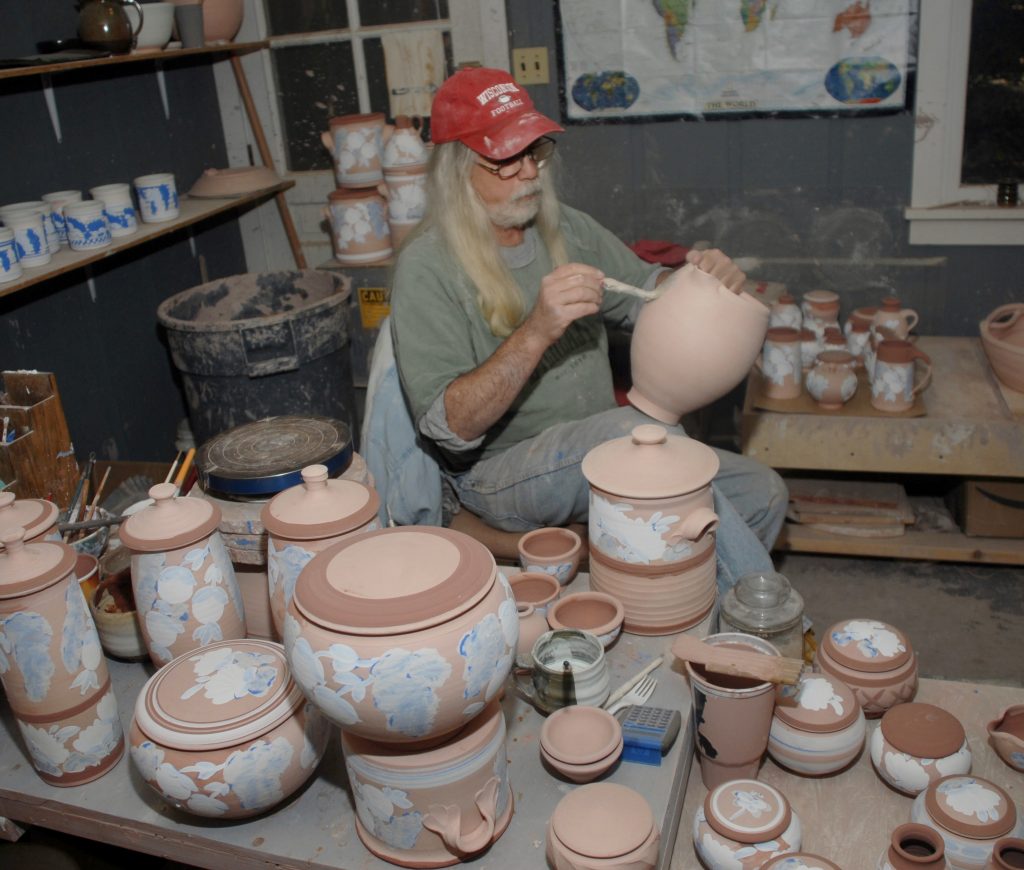
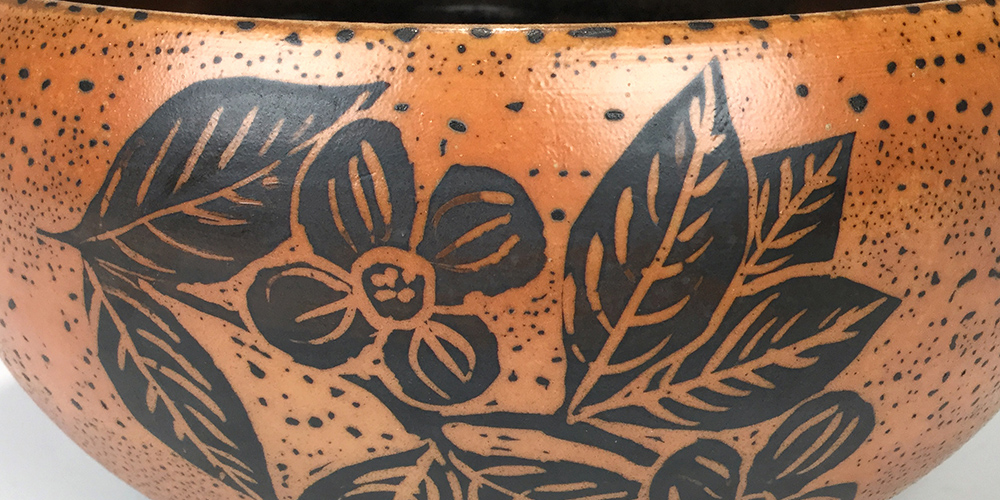
Much of my work is done using a stoneware clay mined in Western PA. For about the last year, I have migrated to using two other clays. My new body of work is formed using porcelain clay from California, which I first fire and then apply a thin layer of flashing slip, a thin layer of Kaolin, a clay mineral, and some feldspar to the outside of the pot. The Kaolin I use is from a stash of bags I got from Frank Wheaton’s pottery factory in Millville after it closed in the ’80s. After the flashing slip is applied, I fire the pots again to 1800 degrees F. to bond the slip to the porcelain. I then apply adhesive stencils to the pots that I create and cover the entire pot with liquid wax. After the wax dries, I remove the image and then apply a black underglaze over the pieces. Where the sticker was, the stain will soak in, and where then wax is the water-based colorant will bead up. I could remove all these stain beads, but I choose to leave them as they form a mottled background for the design, which I like. The pots are then fired in the salt kiln, which coats them with a transparent glaze, and whereas the porcelain would typically be white, the flashing slip forms various shades of brown and orange, creating a unique piece of pottery. Sometimes the pots may come out with a little dryer finish than I like, and I will then refire them a fourth time in my gas kiln, bringing out a glossier finish on the pots.
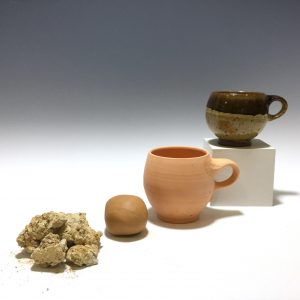 The second clay I have been using a lot of is a local clay from the site of Northeast Precast company bordering on Route 55 in Vineland, NJ. The owners, the Ruga family permitted me to mine clay on the site, and they graciously delivered like 20 tons of it behind our studio by the kilns. Potters refer to clay being mined locally like this as ‘Wild’ clay. We have to do some processing to the clay, which is labor-intensive but again, the rewarding aspect of using it outweighs the effort. I have found it to work best in our gas-fired glaze kiln and even more so in our woodfire kiln. Using local clay and firing it with local wood is such a primal process that creates a unique WheatonArts kind of ware. Though we have been experimenting with the clay and refining it for about two years, I feel like we still have a lot to learn about this clay body and its possibilities. It is an absolute joy to throw this clay on the potter’s wheel.
[See the video as
Terry Plasket discusses the process of prospecting, processing, and firing local wild “Ruga” clay.]
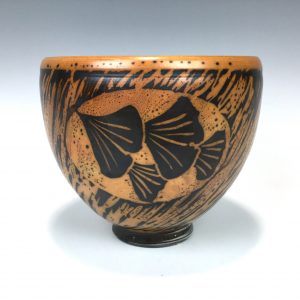
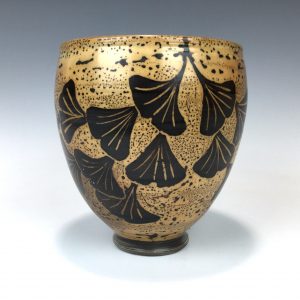
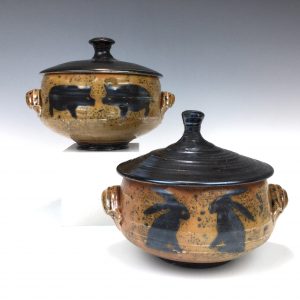
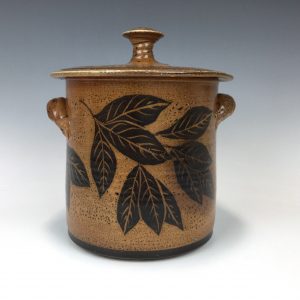
Terry Plasket, Artist Bio
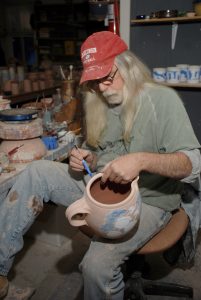 I attended Jacksonville University in Florida for six years and then Glassboro State College (Rowan University) for two years before becoming a member of the WheatonArts community in 1979. I have been a potter here for almost 42 years and have helped craft a dynamic first class pottery studio with three major kilns that serve my associates and numerous interns. Our studio is open to the public, so visitors can not only watch us work at our craft but have a personal interaction asking us any questions they may have. I produce a line of personal work firing in either a salt glaze kiln, a gas-fire, reduction glaze kiln, or in our two-chamber Noborigama style wood-fired kiln. All the ware I create is fired to over 2350 degrees F. and functional, food-safe, dishwasher safe, microwave safe, and oven-proof.
Visit our studio to connect in person or email me at tplasket@wheatonarts.org.
Artist Spotlight: Eric Goldschmidt
Artist Introduction by Noele Alampi
Manager, The Gallery of Fine Craft
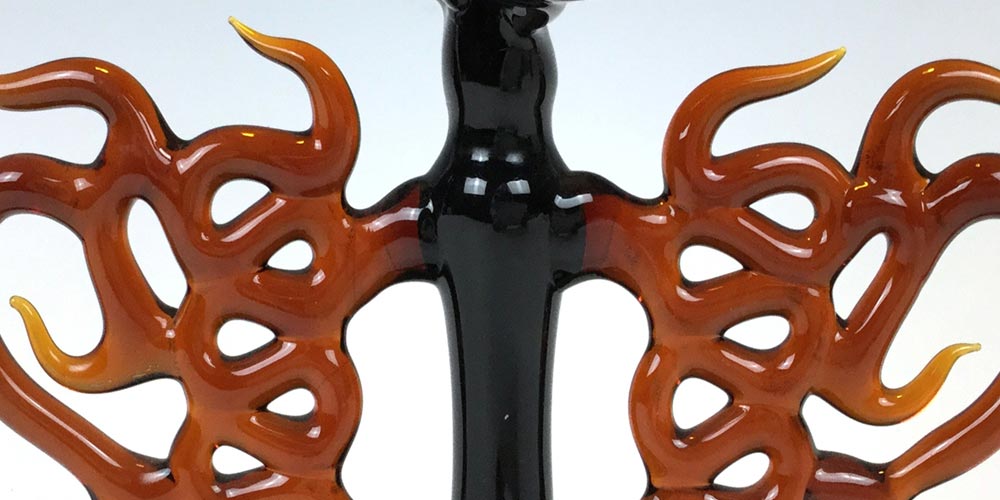
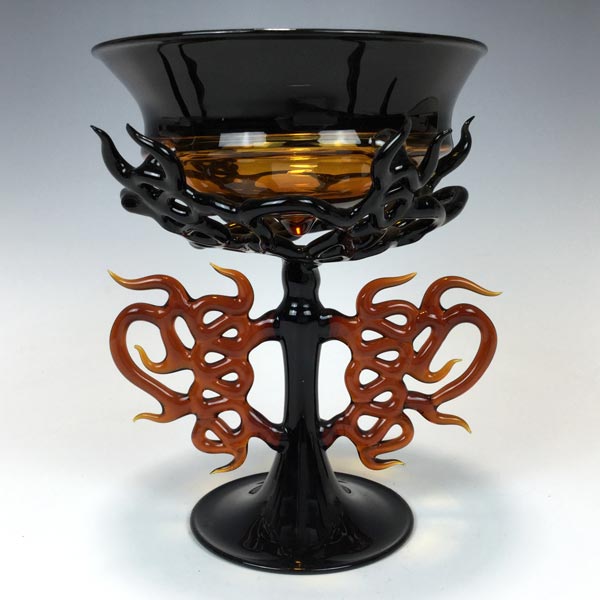
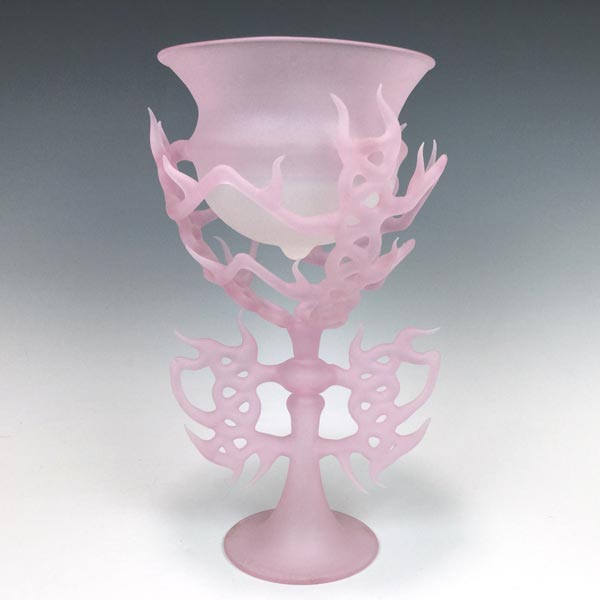
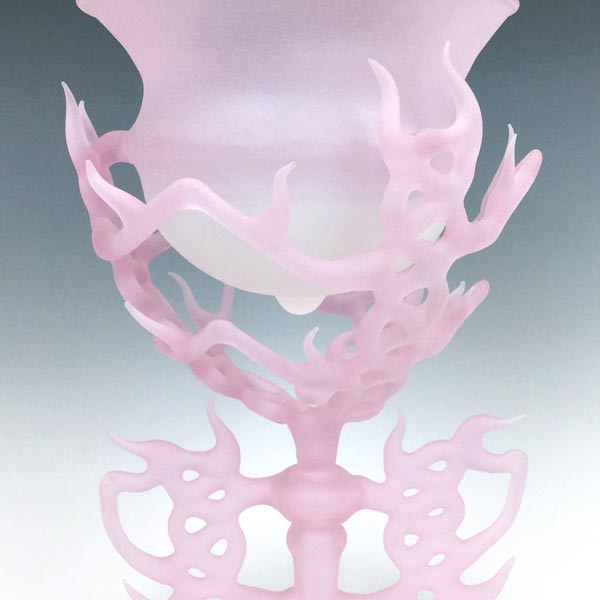
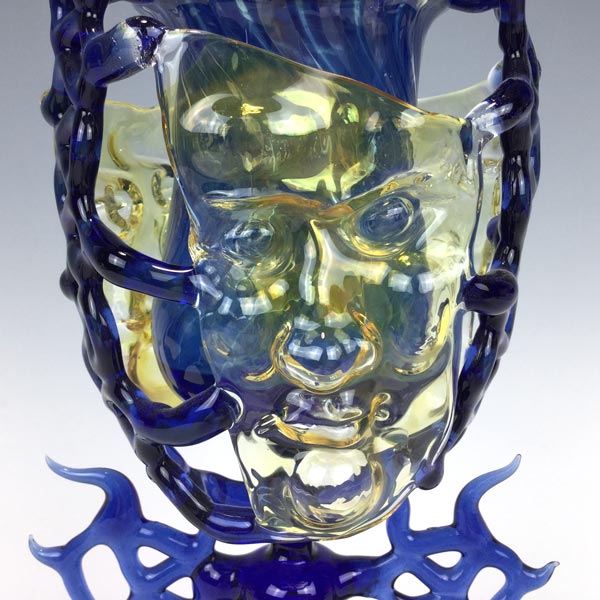
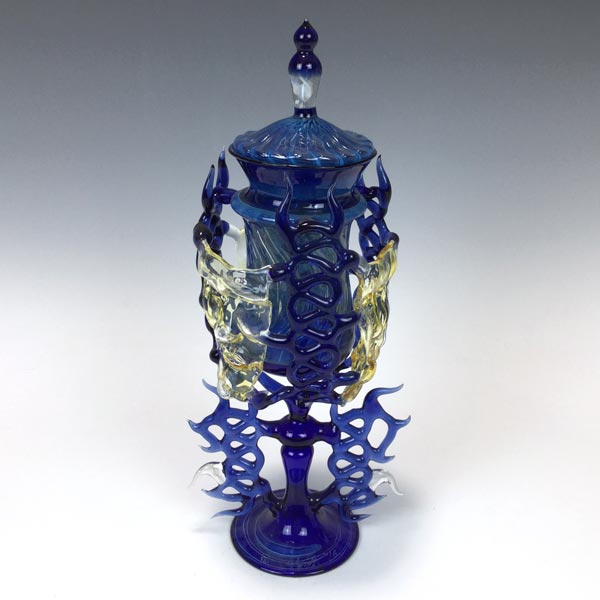
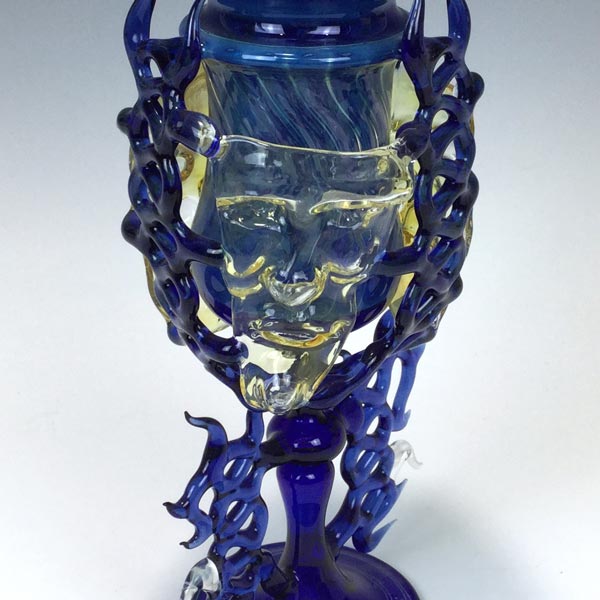
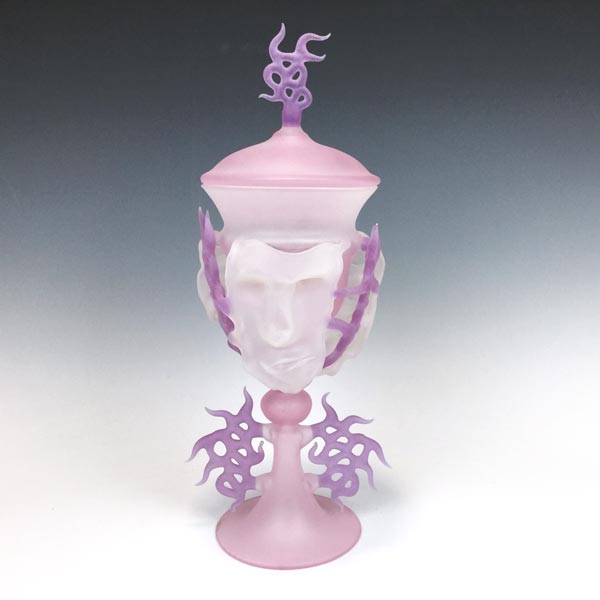
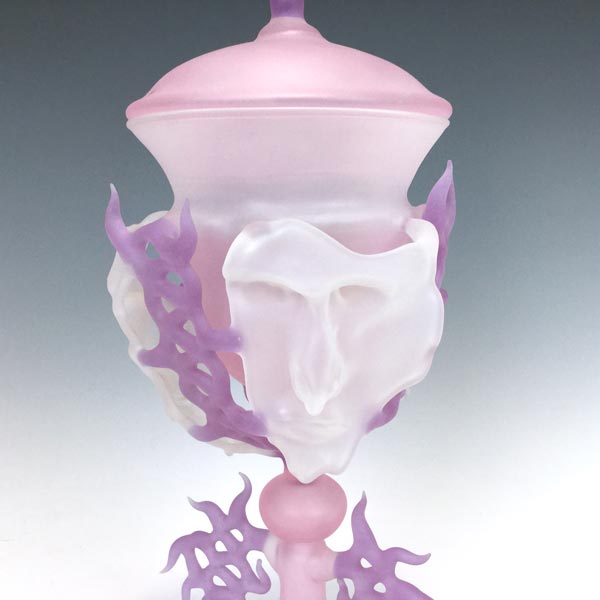
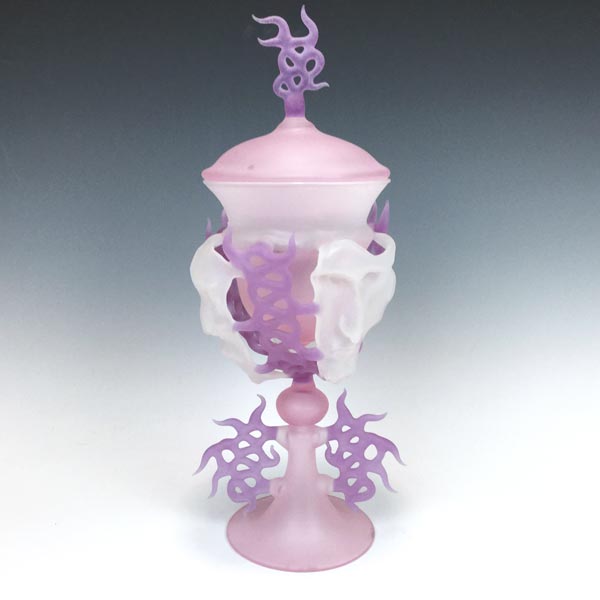
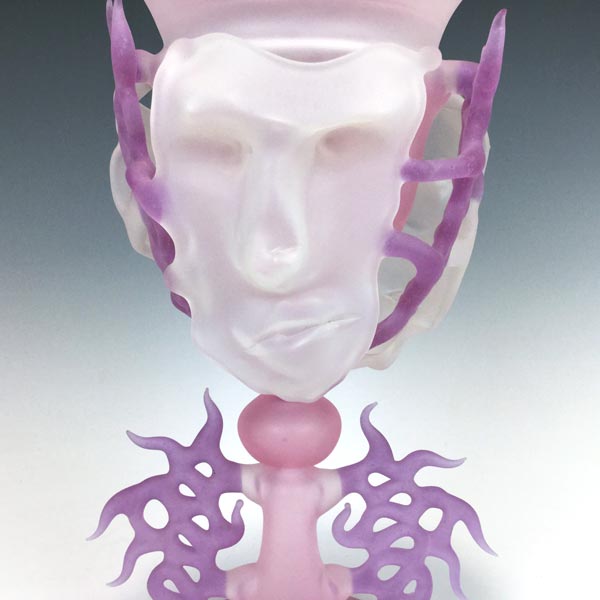
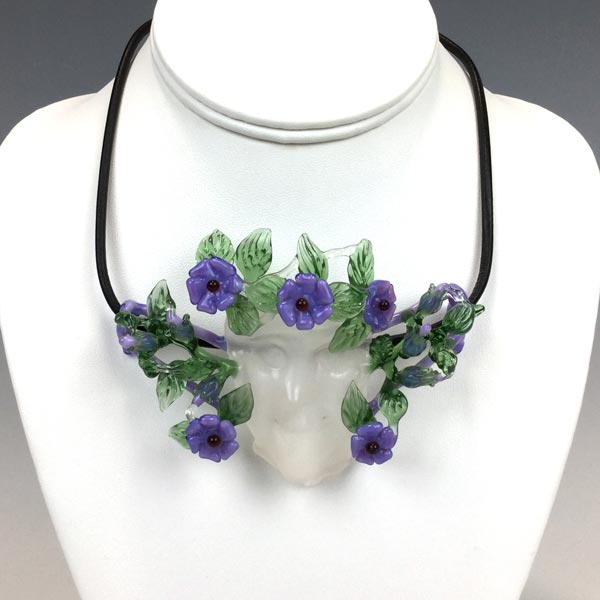
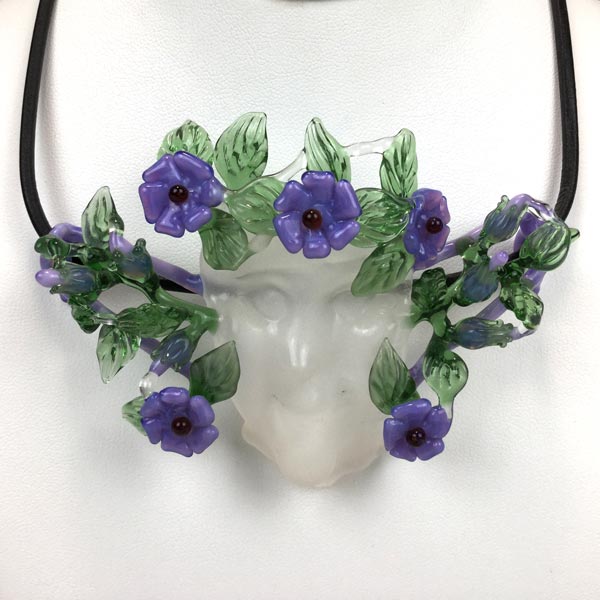
When I first met Eric Goldschmidt in 2017, he was a Featured Presenter at the International Flameworking Conference at Salem County College. I was struck by his “Cage Cup” Series. These goblets and vessels feature fragmented face imagery surrounded by twisted vine-like “cages.” These cages create a more in-depth narrative beyond their traditional silhouettes. Eric has stated that this series is a “metaphor for the cages that we become entrapped in within our lives.” They draw the viewer in to find the deeper narrative.
Eric’s other line of work includes a series of elegant lidded goblets. Each has a removable lid accented with a delicate finial. The color palettes range in color from green to blue to purple. The set we are showcasing in The Gallery is a rich smoke gray color. They are truly stunning in the natural light of our bay window.
I always look forward to seeing what fantastic and inventive new work Eric will create next.
 About Eric Goldschmidt
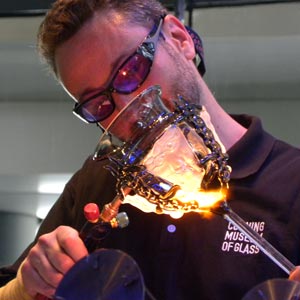
Since 1996, Eric Goldschmidt has devoted himself to practicing and developing hot glass techniques with a focus on flameworking while studying and assisting with many of the world’s most talented glass artists. Although he has been working with glass since 1996, Goldschmidt started working with molten materials in 1993 as a candlemaker. However, after witnessing flameworking, he became intrigued by the process, which led him to take classes from master flameworkers at The Studio of The Corning Museum of Glass. He was soon hooked and began working at The Studio in the Make Your Own Glass Workshop and as the resident flameworker. Now, as the properties of glass programs supervisor at the Museum, he gives live demonstrations in flameworking, glass breaking, and optical fiber, in addition to teaching, lecturing, and exhibiting his work around the world.
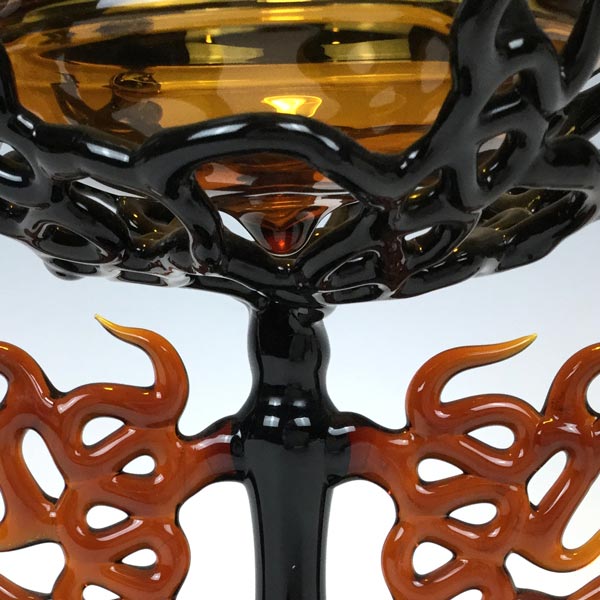


Shop WheatonArts The Gallery of Fine Craft for Eric Goldschmidt’s work